Key Takeaways
Urdu-speaking psychologists are scarce in most countries with large Pakistani communities, including the US, UK, Canada, Australia, and the Gulf. Online therapy removes that barrier entirely — you can book a confidential Urdu-language session with a licensed psychologist in Pakistan from anywhere in the world, at a time that suits your time zone.
If you've spent hours searching "Urdu speaking psychologist near me" while living abroad and come up empty, you're not imagining the gap — it's real, and it affects Pakistanis across the US, UK, Canada, Australia, and the Gulf. This guide explains why Urdu-speaking mental health support is so hard to find overseas, and how online therapy in Urdu has closed that gap for thousands of overseas Pakistanis.
Why Overseas Pakistanis Struggle to Find Urdu-Speaking Psychologists
Mental health systems in most Western countries train and license psychologists locally, and the workforce is built around the languages most commonly spoken by the majority population. Urdu — despite being spoken by tens of millions of people worldwide — rarely makes it onto that list, even in cities with sizeable Pakistani communities.
The result is a strange mismatch: a Pakistani software engineer in Toronto, a nurse in London, or a student in Melbourne can often find a therapist within a short drive, but almost never one who speaks Urdu fluently and understands Pakistani family structure, marriage expectations, or the specific stress of being caught between two cultures. Many end up going without support entirely, rather than trying to explain deeply personal issues through an interpreter or in a second language that doesn't quite capture what they're feeling.
Countries Where Urdu-Speaking Psychologists Are Rare
Based on client inquiries we receive at The Psychological Wellbeing, the shortage of Urdu-speaking psychologists is consistently reported across a handful of countries with large Pakistani diaspora populations:
- United States — Home to one of the largest overseas Pakistani communities, yet Urdu-speaking licensed therapists remain concentrated in a handful of major metro areas, leaving smaller cities and suburbs underserved.
- United Kingdom — Despite decades of Pakistani migration to cities like Birmingham, Bradford, and London, NHS and private mental health services still have very few Urdu-fluent psychologists relative to demand.
- Canada — Cities like Toronto and Mississauga have large South Asian populations, but Urdu-specific therapy — as distinct from Hindi or Punjabi — is still hard to book, especially outside major urban centers.
- Australia — A fast-growing Pakistani community in cities like Sydney and Melbourne currently has very limited access to Urdu-speaking mental health professionals.
- Gulf countries (Saudi Arabia, UAE, Qatar) — Millions of Pakistani expatriate workers live here, but local mental health infrastructure for expatriates is limited, and Urdu-speaking psychologists are difficult to access even in major cities.
In every one of these regions, the underlying problem is the same: a large Urdu-speaking population, but a mental health workforce that wasn't built to serve it.
Why Language Matters in Therapy
Therapy relies on precise emotional language — and most people can express feelings like sharam (shame), ghussa (anger), or dil pareshan hona (a troubled heart) far more accurately in Urdu than in English. When a client has to translate their emotions in real time, something is inevitably lost, and sessions can end up focused on finding the right words instead of processing the feelings themselves.
An Urdu-speaking psychologist also understands cultural context without it needing to be explained — joint family dynamics, expectations around marriage and children, the pressure of being the "successful" one who moved abroad, or the guilt of being far from aging parents. That shared understanding often shortens the time it takes to get to the real issue in therapy.
How Online Urdu-Language Therapy Works
Online therapy has effectively erased the geographic barrier. Instead of searching for a local Urdu-speaking therapist who may not exist in your city, you can book a confidential session with a licensed psychologist in Pakistan over secure video call, at a time that works with your time zone — whether you're in New York, London, Toronto, Sydney, Dubai, or Doha.
Sessions are conducted the same way as in-person therapy: same confidentiality standards, same evidence-based approaches like CBT, and the same 50-minute to one-hour format — just conducted in the language you think and feel in.
Meet Our Urdu-Speaking Psychologists
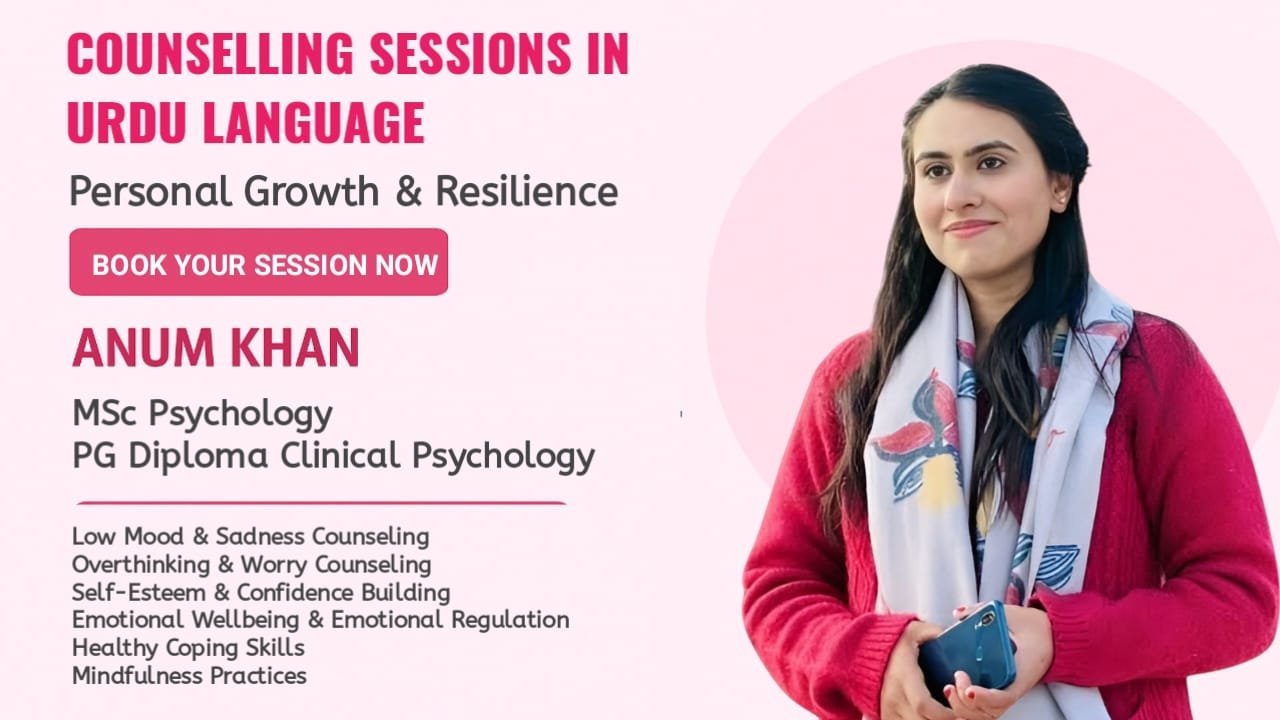
At The Psychological Wellbeing, we're one of the leading online counselling and therapy centres offering Urdu-language sessions to clients across Pakistan and the overseas Pakistani community. Our Urdu-speaking psychologists include:
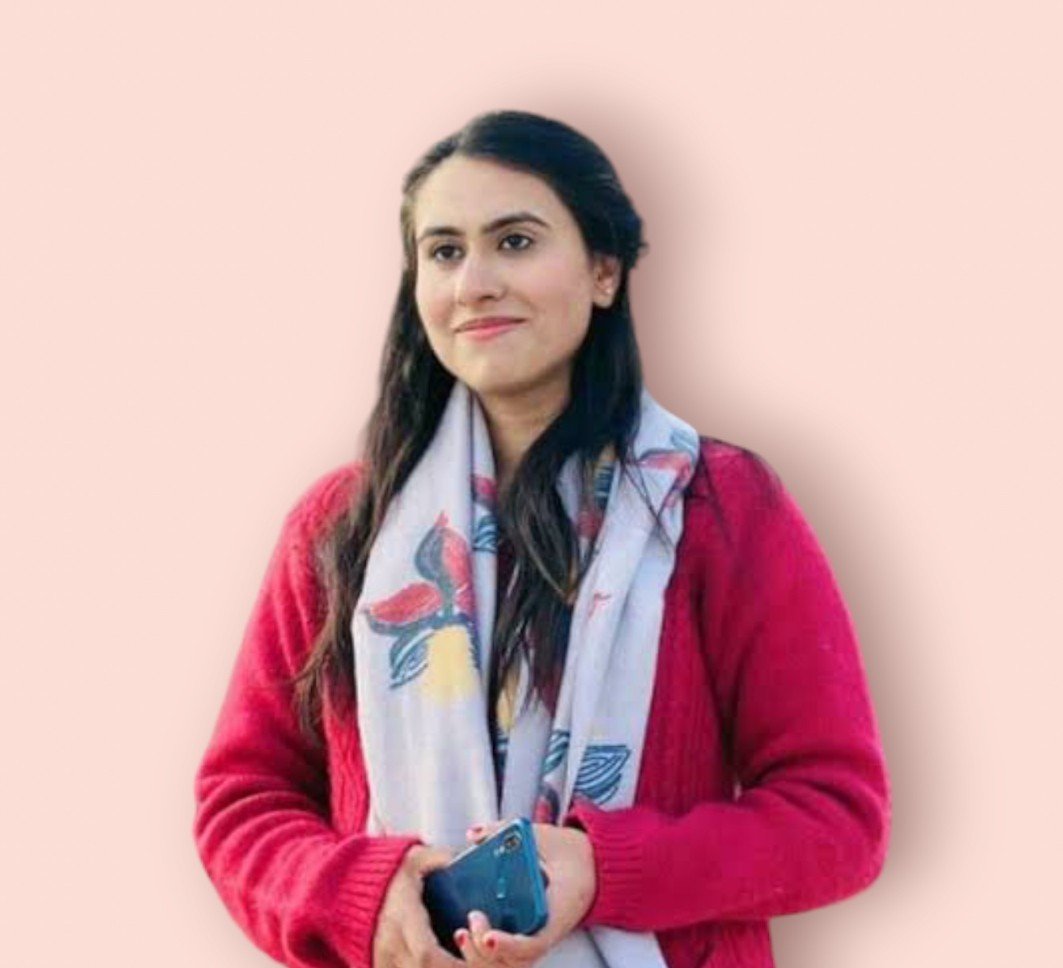
- Anum Khan – Anxiety & Depression, Relationship issues, CBT approaches and more
- Mehak Fatima – Child & Adolescent Psychology, Behavioral Issues, Family Counseling
- Aqsa Ijaz – Relationship Counseling, Stress Management, Mindfulness-Based Therapy
Whether you need support with anxiety and depression, your child's behavioral concerns, marital or relationship stress, or general overwhelm from adjusting to life abroad, there's an Urdu-speaking psychologist on our team suited to your concern.
What to Expect in Your First Session
Your first Urdu-language session is a straightforward conversation — your psychologist will ask about what's bringing you to therapy, your background, and what you're hoping to work through. There's no requirement to have everything figured out beforehand; most people find it easier to open up once they realize they don't have to search for the right English word for what they're feeling.
This article is for general informational purposes and does not replace professional diagnosis or treatment. If you are struggling with your mental health while living abroad, please consult a licensed psychologist or counsellor.
Frequently Asked Questions
Most Western mental health systems train and license therapists locally, and Urdu is not among the most common client-facing languages in countries like the US, UK, Canada, or Australia. This leaves a gap for Urdu-speaking clients even in cities with large Pakistani communities.
Overseas Pakistanis in the United States, United Kingdom, Canada, Australia, and Gulf countries such as Saudi Arabia, UAE, and Qatar frequently report difficulty finding a licensed psychologist who speaks Urdu, despite sizeable Pakistani populations in each.
Yes. Online therapy removes the geographic barrier — you can book a confidential Urdu-language session with a licensed psychologist in Pakistan over video call from the US, UK, Canada, Australia, the Gulf, or anywhere else, at a time that fits your time zone.
Yes. Research on tele-therapy shows outcomes comparable to in-person sessions, and being able to express yourself in your first language often makes online Urdu-language therapy more effective, not less, because clients communicate more precisely and openly.
Our Urdu-speaking team includes Anum Khan (anxiety, depression, trauma-informed therapy, CBT), Mehak Fatima (child and adolescent psychology, behavioral issues, family counseling), and Aqsa Ijaz (relationship counseling, stress management, mindfulness-based therapy).
Looking for a psychologist who speaks Urdu?
Book a confidential online session from anywhere in the world — same time zone flexibility, same language you think in.